
.png?width=14&height=14&name=Group%20(3).png)
.png?width=14&height=14&name=Group%20(4).png)




 By
By
.jpg?width=595&height=335&name=Copy%20of%20Natura-26-0015%20(1).jpg)
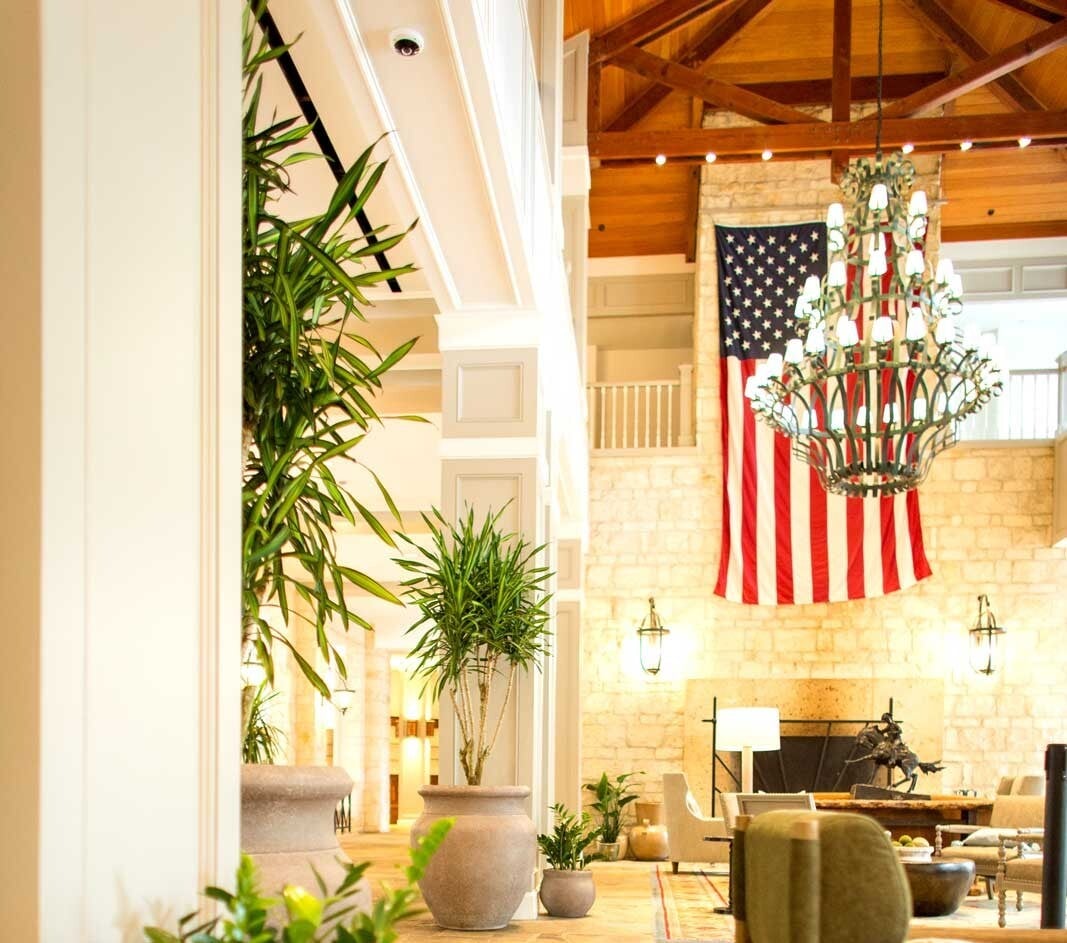
Texas presents a unique challenge for corporate interiors. Summer heat, intense sunlight, and heavy air-conditioning cycles create a demanding environment not only outside, but inside office buildings as well. Facilities managers are often tasked with maintaining a professional, plant-filled workspace in conditions that can quickly stress or kill the wrong species.
The good news: there are many indoor plants that survive Texas heat extremely well when properly selected and professionally maintained. This guide focuses on plants that tolerate the combination of high outdoor temperatures, strong sun exposure at windows, and dry, cool indoor air—all common in Texas offices.
-
Example Plant Species That Perform Well in Texas Corporate Interiors
-
How Facilities Managers Can Maximize Plant Survival in Texas
Understanding the Texas Office Environment
Before choosing plants, it’s important to understand the environmental profile of a typical Texas office building.
Common conditions include:
-
Intense Solar Exposure at Windows
South- and west-facing glass can generate very high light and heat loads at the perimeter, especially in summer.
-
Strong Air-Conditioning
Interior spaces are often kept cool and dry to offset exterior heat, creating low humidity that many tropical plants dislike.
-
Temperature Fluctuations
Zones near entrances, loading docks, or poorly balanced HVAC can experience temperature swings between day and night or weekday and weekend modes.
-
Mixed Light Levels
Some areas are bright and exposed; others—interior corridors, conference rooms, and deep-plan workspaces—may receive very little natural light.
-
Large, Multi-Floor Footprints
Different floors and exposures create microclimates across the same building, requiring tailored plant choices per zone.
Plants for Texas offices must be chosen with these variables in mind.
Key Traits of Plants That Survive Texas Heat Indoors
Plants that perform reliably in Texas corporate interiors tend to share several traits:
-
Tolerance for Low Humidity
The combination of dry outdoor heat and indoor air-conditioning makes humidity-sensitive species more vulnerable. Resilient plants can handle drier air without leaf damage.
-
Flexibility Across Light Levels
Some plants must tolerate bright, indirect light near windows, while others must perform well in low-light interiors. Using a palette that covers both is essential.
-
Strong Root Systems and Adaptable Substrate Tolerance
Plants with robust roots can handle occasional stress from uneven watering or rapid soil drying near windows.
-
Heat and Light Tolerance at the Perimeter
Certain species can withstand higher light intensity and radiant heat near glass, especially on west-facing facades.
-
Low Pest Susceptibility in Dry Air
Dry indoor environments can favor pests such as spider mites. Plants that are less prone to these issues are easier to maintain.
-
Consistent Visual Performance
Corporate environments require plants that maintain a stable, polished appearance over time—no dramatic seasonal drop-offs, excessive leaf drop, or unpredictable growth habits.
Recommended Plant Categories for Texas Office Buildings
Instead of selecting individual species in isolation, it helps to think in terms of **plant categories** that meet specific environmental needs in Texas buildings.
Recommended categories:
-
Hardy Floor Plants for Perimeter Zones
Used near windows, lobby glazing, and atriums where light is stronger.
-
Resilient Low-Light Plants for Interior Zones
Used in corridors, interior workstations, and conference rooms with minimal natural light.
-
Compact Desk and Planter-Top Plants
Used on workstations, credenzas, and storage units where space is limited but visibility is high.
-
Tall Screening Plants
Used to create soft partitions for privacy and acoustic buffering in open-plan offices.
-
Accent Plants for Reception and Executive Areas
Used where aesthetics, structure, and brand impression matter most.
Each category can be populated with species specifically suited to Texas conditions.
Example Plant Species That Perform Well in Texas Corporate Interiors
Below are common examples of plants that typically perform well in Texas office environments when professionally maintained. Specific suitability will still depend on light, HVAC, and building microclimates.
Sansevieria (Snake Plant)
Best for:
-
Low- to medium-light interior zones
-
Areas where maintenance access is limited
Why it works in Texas:
-
Tolerates low humidity and irregular watering
-
Performs well in a wide range of light conditions
- Strong architectural form for modern offices
Zamioculcas zamiifolia (ZZ Plant)
Best for:
-
Deep-plan offices and low-light corridors
-
Spaces needing tidy, compact greenery
Why it works in Texas:
-
Very drought-tolerant
-
Handles dry air and low light better than many tropicals
- Maintains a clean, glossy appearance with minimal issues
Aglaonema (Chinese Evergreen)
Best for:
-
Interior work areas with moderate light
-
Planter groupings and lobby compositions
Why it works in Texas:
-
Adaptable to varied indoor conditions
-
Broad leaves support strong biophilic impact
- Many cultivars offer color and pattern variation
Dracaena Varieties
Best for:
-
Floor planters in open-plan offices
-
Perimeter areas with filtered light
Why they work in Texas:
-
Many cultivars handle bright, indirect light well
-
Good vertical form for screens and corners
- Relatively tolerant of HVAC-driven dryness
Ficus Lyrata (Fiddle Leaf Fig) – in Controlled Conditions
Best for:
-
High-visibility lobbies and executive areas with strong natural light
Why it can work in Texas:
-
Performs well with consistent bright light and stable conditions
-
Provides strong visual presence and height
Considerations:
- Less forgiving in fluctuating environments—best under professional care and in well-controlled zones.
Kentia and Rhapis Palms (Where Conditions Allow)
Best for:
-
Reception areas and collaborative spaces with moderate light
Why they can work in Texas:
-
Provide soft, vertical greenery with good visual impact
-
Handle indoor conditions when not exposed to direct, harsh sunlight
Considerations:
- Require careful placement away from direct west-facing glass and extreme HVAC airflow.
Philodendron and Monstera Species
Best for:
-
Planter groupings in open offices and collaborative areas
-
Larger container plantings in lobbies and atriums
Why they work in Texas:
-
Perform well in medium to bright, indirect light
-
Large leaves enhance biophilic response and visual richness
- Reasonably tolerant of indoor conditions when properly watered
How Facilities Managers Can Maximize Plant Survival in Texas
The right species are only part of the solution; **how** plants are deployed and maintained is equally important.
Key strategies for FMs:
-
Zone-Based Plant Selection
Match species to specific building microclimates—perimeter vs interior, north vs west, lobby vs workstation zones.
-
Avoid Placing Plants Directly Against Hot Glass
Even heat-tolerant plants can suffer leaf burn or root stress from radiant heat. Maintain a buffer distance where possible.
-
Coordinate with HVAC Teams
Avoid direct airflow from supply vents onto foliage, especially for broad-leaf species. Where vents cannot be moved, adjust plant locations.
-
Use Appropriate Containers and Substrate
Select container types and soil mixes that balance moisture retention with drainage, especially in drier indoor conditions.
-
Implement a Professional Maintenance Program
Texas conditions can accelerate decline if plants are not monitored and adjusted regularly. Professional technicians can adapt watering, pruning, and replacement plans per season and zone.
-
Plan for Rotation and Replacement
Some plants will perform best if periodically rotated between higher- and lower-stress locations. Establish a rotation strategy for long-term consistency.
-
Monitor Pests Proactively
Dry indoor conditions may favor spider mites on some species. Regular inspection and treatment prevent problems from escalating.
When to Involve a Professional Interior Plant Provider
For multi-floor or high-profile corporate buildings in Texas, partnering with a professional interior plant provider is usually the most effective way to ensure plants survive local heat conditions.
A specialist can:
-
Assess light, HVAC, and microclimate conditions by zone
-
Recommend species and container systems tailored to Texas buildings
-
Design planting schemes that balance aesthetics, durability, and budget
-
Provide ongoing maintenance, pest management, and plant replacement
-
Adjust care as seasons and building usage patterns change
With the right combination of plant selection, environmental awareness, and professional care, Texas offices can sustain healthy, attractive plants year-round—even in the face of intense regional heat.

Established in 1983, Natura - Interior Plant Design transforms workplaces with biophilic design. We specialize in interior plant design, indoor plant service, and corporate plant service, focusing on interior plantscaping and green walls to enhance office environments, boost wellness, and increase productivity. Serving major markets across Texas and Florida, we deliver live plants, green wall systems, and holiday decor packages to create thriving environments where people live, work, learn, and play. At Natura, we care for both plants and people within the built environment, reconnecting people with nature through innovative plant solutions.
Serving businesses across:
Dallas, Houston, Austin, San Antonio, Corpus Christi, Tampa, Orlando, and Sarasota.
.jpg)