.png?width=14&height=14&name=Group%20(3).png)
.png?width=14&height=14&name=Group%20(4).png)




 By
By
.jpg?width=595&height=335&name=Copy%20of%20Natura-26-0016%20(1).jpg)
Vertical plant installations have become a signature element of modern workplace design. In corporate environments, two solutions dominate most conversations: green walls and moss walls. Both create strong visual impact, reinforce biophilic design principles, and support brand positioning—but they differ significantly in cost, maintenance, infrastructure requirements, and risk profile.
For architects and developers, choosing between a green wall and a moss wall is about more than appearance. The right solution must align with the project’s design vision, available infrastructure, maintenance requirements, and long-term performance objectives.
This guide explores the key differences between green walls and moss walls, helping project teams determine which system is best suited to their commercial building and intended user experience.
-
What Is a Green Wall?
-
What Is a Moss Wall?
-
Key Differences Between Green Walls and Moss Walls in Corporate Settings
-
Maintenance, Risk, and Cost Considerations for FMs
-
Which Is Better for Corporate Spaces – Green Wall or Moss Wall?
What Is a Green Wall?
A living green wall is an actively growing, soil- or substrate-based vertical planting system. It uses live plants maintained over time through irrigation, fertilization, and routine horticultural care.
Core characteristics of green walls:
-
Active Root Systems
Plants grow in modules, pockets, or troughs with soil or an engineered substrate. Roots continually develop and must be managed over time.
-
Integrated Irrigation
Green walls require reliable watering—via drip systems, recirculating systems, or direct-feed irrigation. In most commercial applications, irrigation is automated.
-
Ongoing Horticultural Maintenance
Plants require pruning, replacement, fertilization, pest monitoring, and seasonal adjustment to light and HVAC changes.
-
Strong Biophilic Presence
Moving, living foliage provides a high biophilic impact—especially in lobbies, atriums, and customer-facing spaces.
-
Infrastructure Requirements
Depending on the system, green walls may require: water supply, drainage, access to power (for pumps and controllers), structural support, and safe maintenance access.
Green walls perform best when designed from the outset with building infrastructure and maintenance capacity in mind.
What Is a Moss Wall?
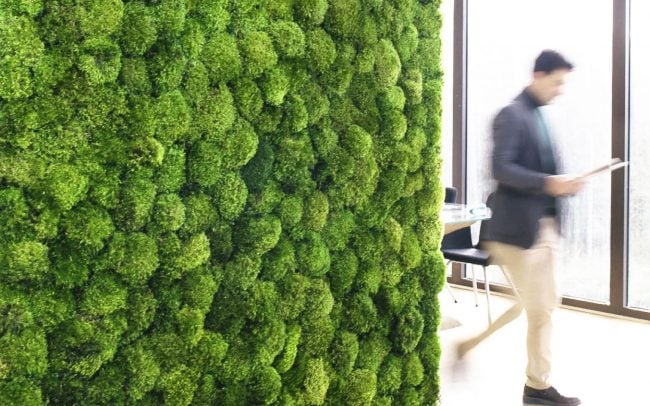
A moss wall, in most corporate contexts, is a preserved moss installation, not a living system. The moss has been treated to maintain appearance without ongoing growth.
Core characteristics of moss walls:
-
Non-Living, Preserved Material
The moss is stabilized and no longer growing. It does not require sunlight, watering, or fertilization.
-
No Irrigation Needed
Moss walls do not use irrigation systems. This eliminates water-related risk, leaks, and many service requirements.
-
Low Ongoing Maintenance
Apart from periodic dusting and light cleaning, moss walls require very little routine care.
-
High Design Flexibility
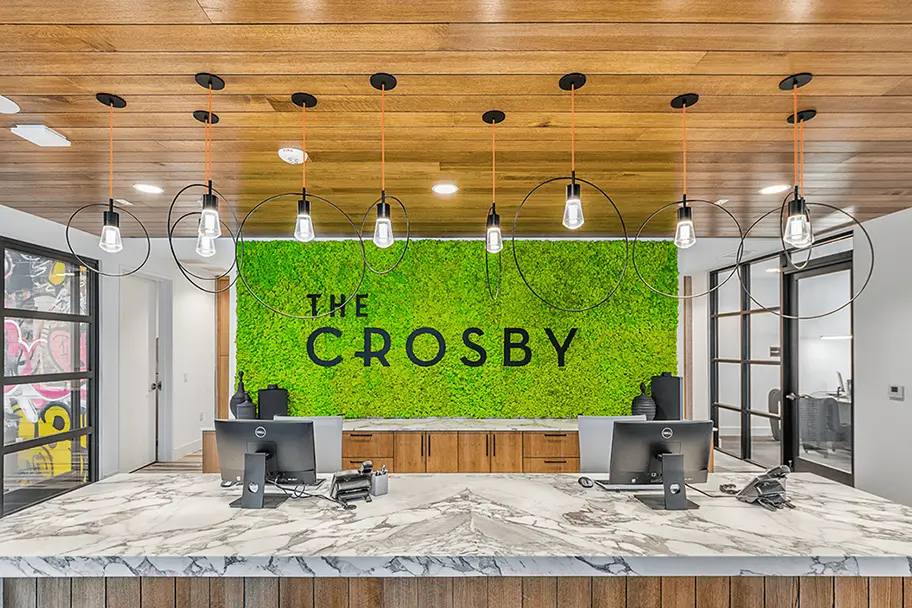
Moss can be installed in various shapes, brand patterns, and color treatments, fitting into signage, logos, and feature walls.
-
Environmental Sensitivity
Moss walls perform best in stable indoor conditions—away from direct sunlight, high humidity, and direct HVAC airflow that can dry them excessively.
While moss walls are biophilic in appearance, they are not “living” in the horticultural sense and do not provide the same dynamic plant behavior as a live green wall.
Key Differences Between Green Walls and Moss Walls in Corporate Settings
For architects, designers, and developers, choosing between a green wall and a moss wall involves balancing visual impact and design intent with the practical requirements of the space. The key differences can be compared across several design, infrastructure, maintenance, and performance considerations:
-
Living vs. Non-Living
- Green walls: living plants that grow and change.
- Moss walls: preserved, non-living materials that remain visually stable.
- Infrastructure Requirements
- Green walls: often require irrigation, drainage, power, and service access.
- Moss walls: require only a stable mounting surface and controlled environment.
- Maintenance Demand
- Green walls: regular horticultural service (watering, pruning, replacement, pest management).
- Moss walls: low-touch, periodic cleaning and inspection.
- Risk Profile
- Green walls: water leaks, pump failures, and plant loss must be managed.
- Moss walls: lower mechanical risk, but can dry or fade if poorly placed.
- Biophilic Performance
- Green walls: strong dynamic biophilic presence with living foliage.
- Moss walls: strong visual biophilic effect, but static and primarily aesthetic.
- Longevity and Refresh Cycles
- Green walls: long-term systems with ongoing plant rotation and replacement.
- Moss walls: typically 5–10 year visual life, depending on conditions and quality.
- Cost Profile
- Green walls: higher upfront installation + ongoing maintenance costs.
- Moss walls: moderate upfront cost; low ongoing costs.
Maintenance, Risk, and Cost Considerations
When specifying a vertical planting system, architects, designers, and developers need to consider more than its initial visual impact. Maintenance requirements, infrastructure demands, potential risks, and long-term costs can all influence how successfully a green wall or moss wall performs within the completed space.
Maintenance considerations:
-
Green Walls
- Bi-weekly horticultural visits.
- System checks for pumps, timers, and irrigation lines.
- Plant replacement programs for underperforming zones.
- Access planning (lifts, ladders, catwalks) for safe service.
- Moss Walls
-
- Occasional dusting and visual inspection.
- Protection from direct airflow and sunlight.
- Periodic repairs if panels are physically damaged.
- Water Management (Green Walls)
- Potential for leaks affecting flooring, walls, or tenant spaces.
- Need for robust waterproofing behind installations.
- Regular system audits to prevent failures
- Environmental Stability (Moss Walls)
- Risk of drying, discoloration, or warping if placed in harsh conditions.
- Not suitable for exterior or high-humidity zones.
Cost considerations (high level):
-
- Higher design and engineering cost.
- Ongoing monthly maintenance.
- Potential replacement of plants and system components over time.
-
- Moderate upfront cost per square foot.
- Minimal ongoing operating cost.
- Occasional touch-ups or partial replacements across the wall’s life.
Which Is Better for Corporate Spaces – Green Wall or Moss Wall?
There is no single “better” option—only a better fit for specific goals and conditions. For decision-making, the following guidelines can help:
Green walls are generally the better fit when:
-
Biophilic performance is a strategic priority (e.g., lobby, executive floors, high-profile client areas).
- The building can support irrigation, drainage, and access
- A strong visual statement is required, aligned with brand and wellness initiatives.
- There is a commitment to ongoing professional maintenance.
Moss walls are generally the better fit when:
-
Infrastructure for irrigation and drainage is limited or not feasible
-
Biophilic visual features with minimal maintenance is a need.
-
Risk tolerance for water-based systems is low (e.g., over critical equipment or premium flooring).
- The design calls for logo integration or branded shapes.
In many cases, a hybrid approach works best—for example, using a moss wall in a reception feature and a green wall in an atrium or amenity area where infrastructure and access are more favorable.
When to Consult a Professional Interior Plant Provider
Before specifying a green wall or moss wall, architects, designers, and developers should consult a professional interior plant provider or vertical garden specialist. Early collaboration can help ensure the chosen system aligns with the design intent while accounting for site conditions, infrastructure requirements, long-term performance, and maintenance needs. A professional evaluation typically includes:
-
Site assessment (light, HVAC, humidity, access, and structural considerations)
-
Risk and infrastructure analysis (water, drainage, power, and waterproofing)
-
Cost modeling (installation and recurring maintenance)
-
Recommendations on wall type, system, and plant or moss selection
-
Long-term maintenance planning and guarantee structure
Choosing the right system upfront reduces operational risk, protects the facility, and ensures that your vertical feature continues to perform—both visually and functionally—for years to come.

Established in 1983, Natura - Interior Plant Design transforms workplaces with biophilic design. We specialize in interior plant design, indoor plant service, and corporate plant service, focusing on interior plantscaping and green walls to enhance office environments, boost wellness, and increase productivity. Serving major markets across Texas and Florida, we deliver live plants, green wall systems, and holiday decor packages to create thriving environments where people live, work, learn, and play. At Natura, we care for both plants and people within the built environment, reconnecting people with nature through innovative plant solutions.
Serving businesses across:
Dallas, Houston, Austin, San Antonio, Corpus Christi, Tampa, Orlando, and Sarasota.